

Blog
Pickleball Injuries: How to Stay in the Game Safely
Pickleball is an increasingly popular sport enjoyed by people of all ages and skill levels. However, like any physical activity, pickleball carries the risk of injury.
Adjusting to life after arm amputation is a gradual process that involves healing, rehabilitation, and learning new ways to complete daily tasks. Every person experiences recovery differently, depending on the reason for the amputation, their overall health, and their personal goals. With the right guidance and support, many patients can regain independence and return to the activities that matter most to them.
At Georgia Hand, Shoulder & Elbow, our experienced specialists care for patients recovering from upper limb amputation and other complex conditions affecting the upper limb. With locations in Marietta and Atlanta, GA, our team provides personalized care and ongoing support to help you navigate recovery and work toward your goals.
Immediately after amputation surgery, you will need to protect the healing wound. This may include periodically changing the dressing and checking for signs of infection. It’s important to follow all of the surgeon’s post-operation instructions to ensure a good recovery. Good communication with your care team can help you address any concerns before they escalate.
To manage the swelling in the residual limb, you will likely be given compression garments. These help reduce swelling and prepare the limb for the prosthesis.
Your healthcare team may also recommend gentle exercises to maintain motion, strengthen surrounding muscles, and help your body adapt.
It is normal to experience pain after an amputation. Some people notice sensations that seem to come from the missing limb, even though it is no longer there. This is known as phantom limb pain. You may feel tingling, itching, warmth, pressure, or the sensation that the amputated limb is still there.
One approach to overcome these sensations is mirror therapy. A mirror is placed in front of the intact limb. Movements in this limb are used to simulate movements in the missing limb to trick the brain into thinking that the missing limb is functional.
If you have persistent symptoms or they begin to interfere with sleep or daily activities, your doctor can discuss other appropriate pain management options.
Following clearance from your health care team, you will begin rehabilitation. This often occurs within a few days after surgery. The main components of amputation rehabilitation include protecting the healing area, restoring strength, improving flexibility, and helping the body adjust to changes in movement and function.
The rehabilitation team may include various professionals, including occupational therapists and other rehabilitation specialists. Occupational therapy helps individuals relearn everyday skills using new techniques and adaptive strategies.
During rehabilitation, exercises will be given to stretch and strengthen the arm and shoulder muscles. Therapists also work to help prevent joint stiffness and prepare the limb for future prosthetic use. For many individuals, rehabilitation continues for several months, although each individual is different.
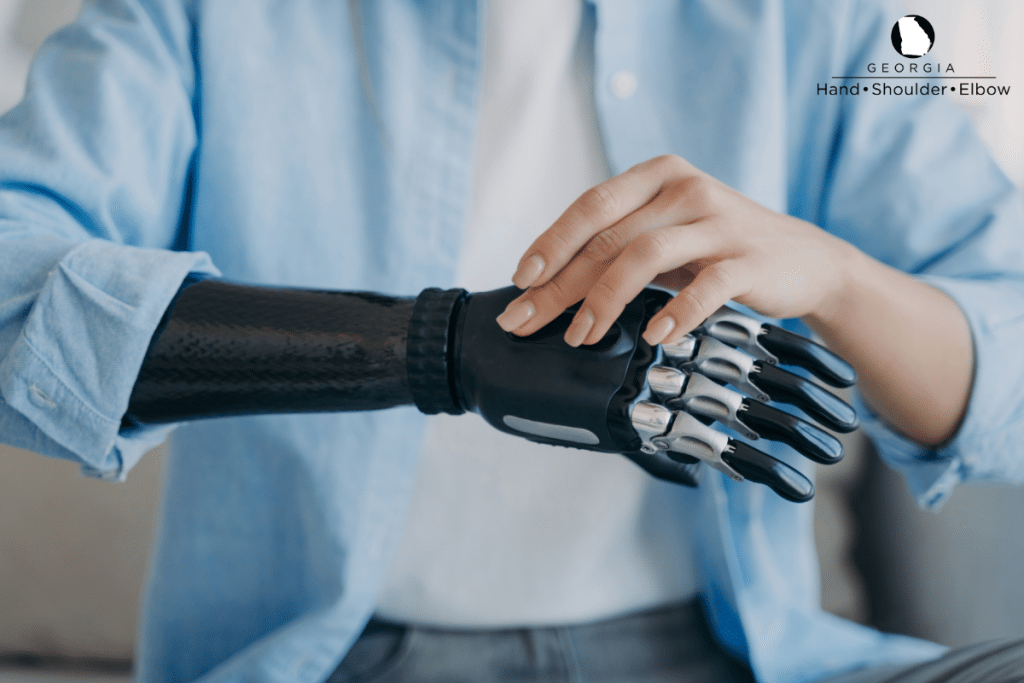
Deciding whether to use a prosthesis is a personal choice. Many people decide to use an arm prosthesis to improve comfort, independence, and daily function. The type of prosthesis chosen will depend on factors such as the level of amputation, lifestyle, work requirements, and personal goals.
Today’s artificial limbs are available in several designs. Some are intended primarily for appearance, while others are designed to assist with gripping, lifting, or performing specific tasks. Advanced devices may include myoelectric technology or specialized components that allow for more natural movement.
Before receiving a permanent prosthesis, the residual limb needs time to heal and change shape. Once the device is fitted, prosthetic training helps individuals learn how to safely wear and use their new prosthesis during everyday activities. Over time, many people become more comfortable using their prosthesis at home, work, and during recreation.
Returning to activities such as dressing, preparing meals, using a computer, or driving may require different techniques after an arm amputation.
An assistive device may help make certain tasks easier while you gain confidence using your prosthesis. Many people also discover new ways to complete activities independently, allowing them to continue working, caring for their families, and participating in hobbies.
As recovery progresses, many individuals return to exercise and recreational activities they enjoy. Whether your goal is gardening, golfing, or another favorite pastime, your rehabilitation specialists can help you safely build strength and confidence along the way.
Adjusting emotionally after an upper limb amputation is just as important as recovering physically. Changes in body image and independence may lead to grief, frustration, anxiety, or other emotional challenges. Your emotional recovery will be personal to you and may continue for many months or longer.
Research suggests that some people who experience limb loss are at increased risk for anxiety, depression, or post-traumatic stress disorder, particularly following a traumatic injury. Support groups and peer mentoring programs often provide practical advice while connecting individuals with others who understand similar experiences.
Maintaining regular routines, staying connected with family and friends, and continuing hobbies may also support emotional well-being during recovery. If emotional concerns begin affecting your quality of life, speaking with a qualified mental health professional may be beneficial.
Recovery after an upper limb amputation is an ongoing journey. As your body continues healing and you become more comfortable using your prosthesis, many daily tasks become easier.
Although every recovery is unique, many people successfully return to work, spend time with loved ones, enjoy recreational pursuits, and live active, independent lives after amputation. Staying engaged with your healthcare providers and following your personalized recovery plan can help support your long-term progress.
If you have questions about recovering from an arm amputation or would like to learn more about treatment and rehabilitation options, our specialists at Georgia Hand, Shoulder & Elbow are here to help. Our team proudly serves patients throughout Marietta and Atlanta, GA, with compassionate, personalized care designed to help you move forward with confidence.
Recovery varies from person to person. It will also depend on the reason for the amputation, your overall health, and the level of amputation. While the surgical wound may heal within several weeks, rehabilitation, prosthetic training, and adjusting to daily activities can take several months or longer.
Phantom limb pain is the sensation of pain or other feelings that seem to come from the missing limb. These sensations are common after amputation, and treatments such as mirror therapy and other pain management strategies may help reduce symptoms.
Not everyone chooses to use a prosthesis, but many people find that it improves independence and their ability to perform everyday tasks. Your healthcare team can help you determine which type of prosthesis best fits your lifestyle, goals, and level of amputation.
Rehabilitation focuses on protecting the healing limb, improving strength and flexibility, learning new ways to perform daily activities, and preparing for prosthetic use if appropriate. Occupational therapists and other rehabilitation specialists work closely with you throughout the recovery process.
Many people successfully return to work, hobbies, exercise, and other daily activities following an arm amputation. Your recovery timeline will depend on your individual goals, rehabilitation progress, and whether you use a prosthesis or adaptive equipment.
Pickleball is an increasingly popular sport enjoyed by people of all ages and skill levels. However, like any physical activity, pickleball carries the risk of injury.

In light of recent developments with regards to COVID-19, we are canceling our conference planned for June of this year. We appreciate your support and look forward to seeing you next year!
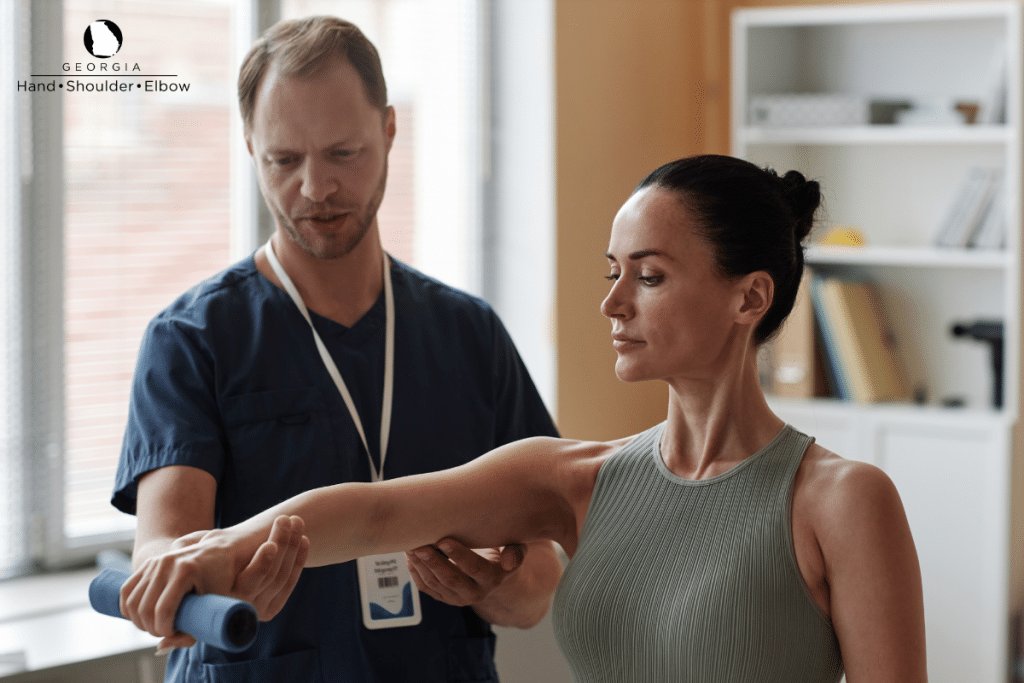
Restore strength, mobility, and function with upper extremity rehabilitation at Georgia Hand, Shoulder & Elbow in Atlanta, GA.

On Saturday, November 9th, 2019 the third annual Hand2Hand event in association with the American Society for Surgery of the Hand’s “Touching Hand Project” was hosted by Georgia Hand, Shoulder, and Elbow…
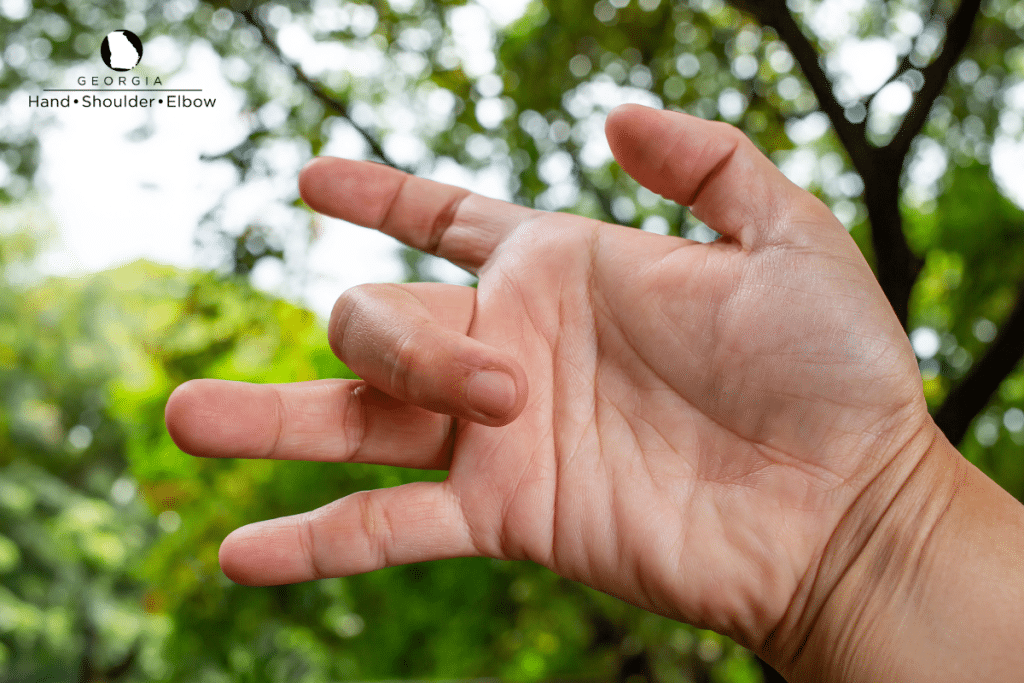
Noticing finger locking or stiffness? Learn the warning signs of trigger finger and how Georgia Hand, Shoulder & Elbow in Atlanta and Marietta, GA, can help restore comfortable hand movement.
We hope you will join us at our 2019 Continuing Education Conference at the Georgia Tech Global Learning Center in Atlanta, GA.